
Environment Management
Ubon Bio Ethanol Public Company Limited and its subsidiaries ("UBE GROUP") operate under the vision of "To be a leading organization committed to enhancing quality of life and societal well-being through innovations in organic agriculture, food, and bio-based industries for sustainable development." The Company is committed to achieving business growth while maintaining a balanced approach to stakeholder care by integrating sustainability management across all Environmental, Social, and Governance (ESG) dimensions throughout every stage of its operations and across the entire business value chain. The Company fosters stakeholder engagement to build confidence among all stakeholder groups, while emphasizing operational excellence, continuous innovation, good corporate governance, and transparent business practices. The Company remains committed to sustainable development goals at both the national and international levels, including the United Nations Sustainable Development Goals (SDGs).
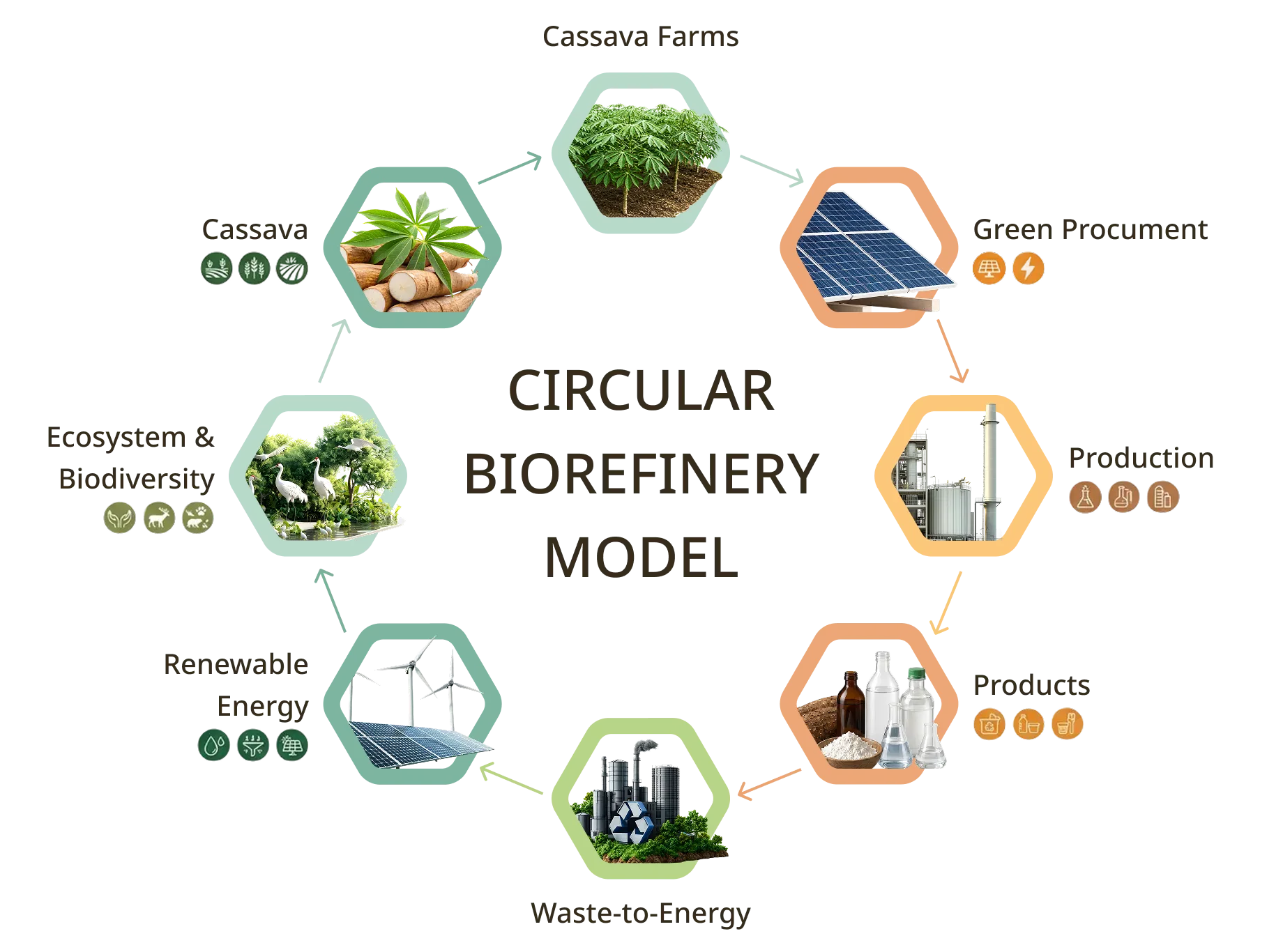
UBE Circular Biorefinery Model
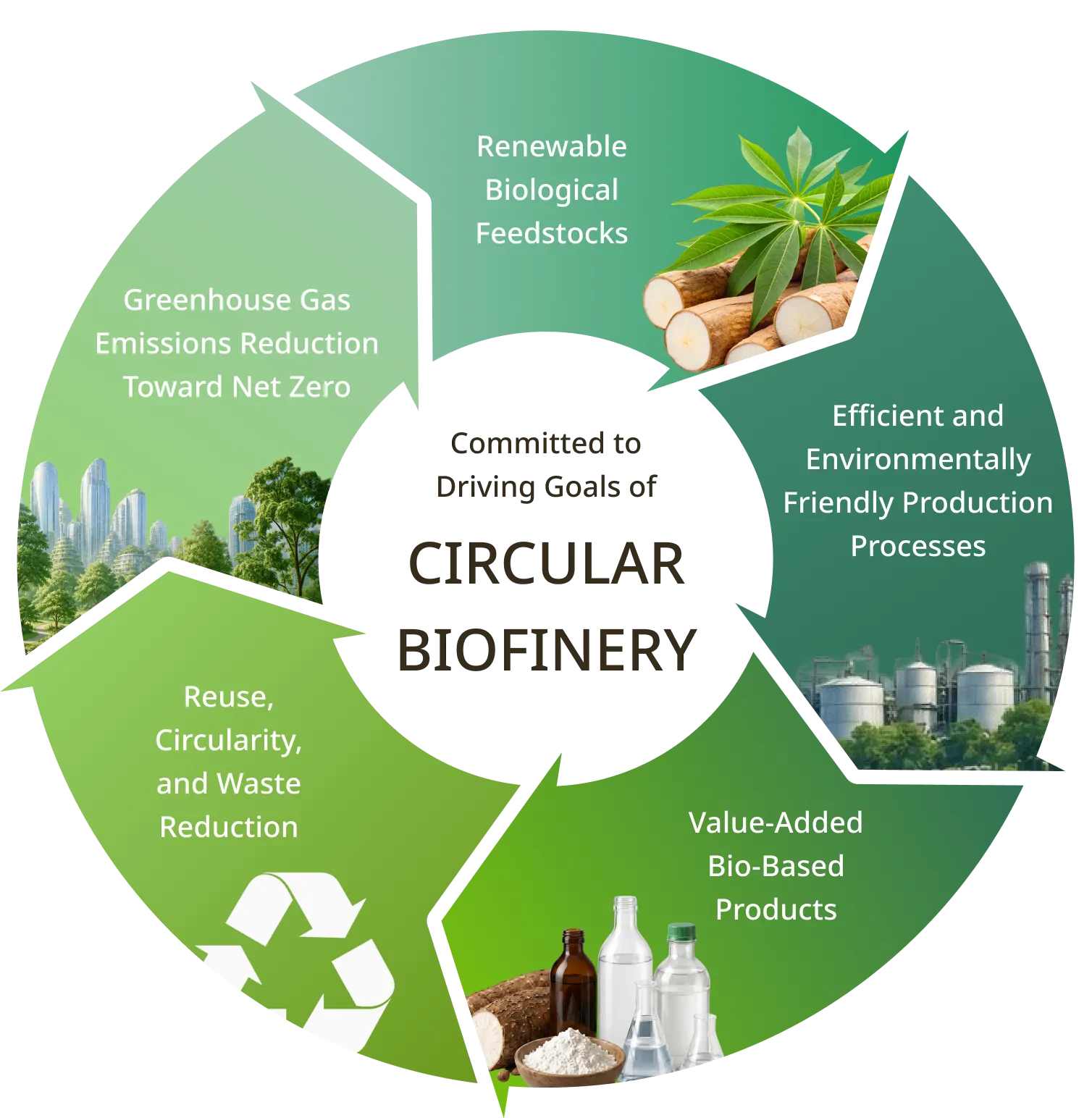
Sustainability Principles and Framework




Environmental Targets 2025
The Company has established (Quantitative Targets) that can be continuously monitored and evaluated to ensure that its operations are aligned with international practices and support sustainable long-term growth. Clear (Key Performance Indicators:KPIs) have been defined for each material topic, with performance reviewed annually. A summary of the targets is presented in the following table.
Greenhouse Gas Emissions Reduction (GHG: Scope 1, 2, 3)
- Reduce GHG emissions by ≥3% per year
- Achieve a cumulative reduction of ≥17% from the 2024 baseline
- Improve energy efficiency and increase the use of renewable energy.
- Reduce GHG emissions by ≥50% by 2030.
- Achieve Carbon Neutrality by 2040
- and Net Zero Emissions by 2050.
Water Management
- Ethanol ≤14.73 m³/L; Starch ≤15.00 m³/tonne - reduce water consumption by ≥10% from the 2024 baseline
- increase water reuse and recycling.
- Reduce total water consumption by ≥30% by 2030
- Increase the proportion of recycled water to ≥20%
- Continuously improve water use efficiency
- and progress toward a circular water use system
Waste & Pollution Management
- Monitor and control waste, air emissions, wastewater, noise, and dust to ensure 100% compliance with applicable laws and relevant standards.
- Improve waste and pollution management efficiency
- maintain 100% compliance with environmental laws; achieve zero significant environmental incidents.
- Strive toward Zero Waste to Landfill
- and continuously reduce environmental impacts from operations.
Biodiversity Management
- Conduct biodiversity risk assessments
- and develop a Biodiversity Action Plan (BAP).
- Assess and mitigate negative impacts while enhancing positive impacts, striving toward a Nature Positive future by 2030
- Restore ecosystems and biodiversity to achieve full recovery, striving toward a Full Recovery by 2050
Environmental Performance 2025
In 2025, the Company placed strong emphasis on comprehensive environmental management throughout its value chain, focusing on four key areas: greenhouse gas emissions reduction, water resource management, pollution and waste management, and biodiversity management. The Company's environmental performance in 2025 compared with its targets is summarized in the following table.
| Topic | Indicator | 2025 Target | 2025 Performance | Compared with Baseline | Status |
|---|---|---|---|---|---|
| Greenhouse Gas Emissions Reduction (GHG: Scope 1, 2, 3) | Scope 1, 2, 3 | Reduce ≥3% per year | 113,918 tCO2e | 29% reduction from the 2024 baseline | Exceeded Target |
| Water Management | Water Intensity – Ethanol Production | ≤ 14.73 | 17.74 | Increased from 2024 | Below Target |
| Water Intensity – Starch Production | ≤ 15.00 | 21.74 | Comparable to 2024 | Below Target | |
| Total Water Consumption Reduction | ≥ 10% | Reduced by 417,852 m3 | Approximately 10% reduction | Achieved Target | |
| Recycled Water Usage | ≥ 10–15% | 287,436 m3 | Increased by 3.5% | Near Target | |
| Waste & Pollution Management | Hazardous Waste Generation | Baseline Year | 5.74 tonnes | 2025 established as the baseline year | Baseline |
| Recycling Waste Segregation | 100% | 100% | Maintained | Achieved Target | |
| Wastewater / Spill Incidents | 100% Compliance / 0 Incident | 100% Compliance / 0 Incident | Maintained | Achieved Target | |
| Air Quality (Stack Emissions) | 100% compliance | 100% compliance | Maintained | Achieved Target | |
| Biodiversity | Organic Cassava Cultivation Without Field Burning | 100% | 100% | Maintained | Achieved Target |
| Tree Planting | Plant 800 trees | Plant 800 trees and 5,000 vetiver grass slips planted | Increased | Achieved Target | |
| Impact on Forest Areas | 0 | No encroachment | No encroachment | Achieved Target | |
| Plant and Animal Species | Baseline Year | - | - | In Progress |